
Blog Details
Wood Construction Connectors: Essential Hardware for Structural Stability
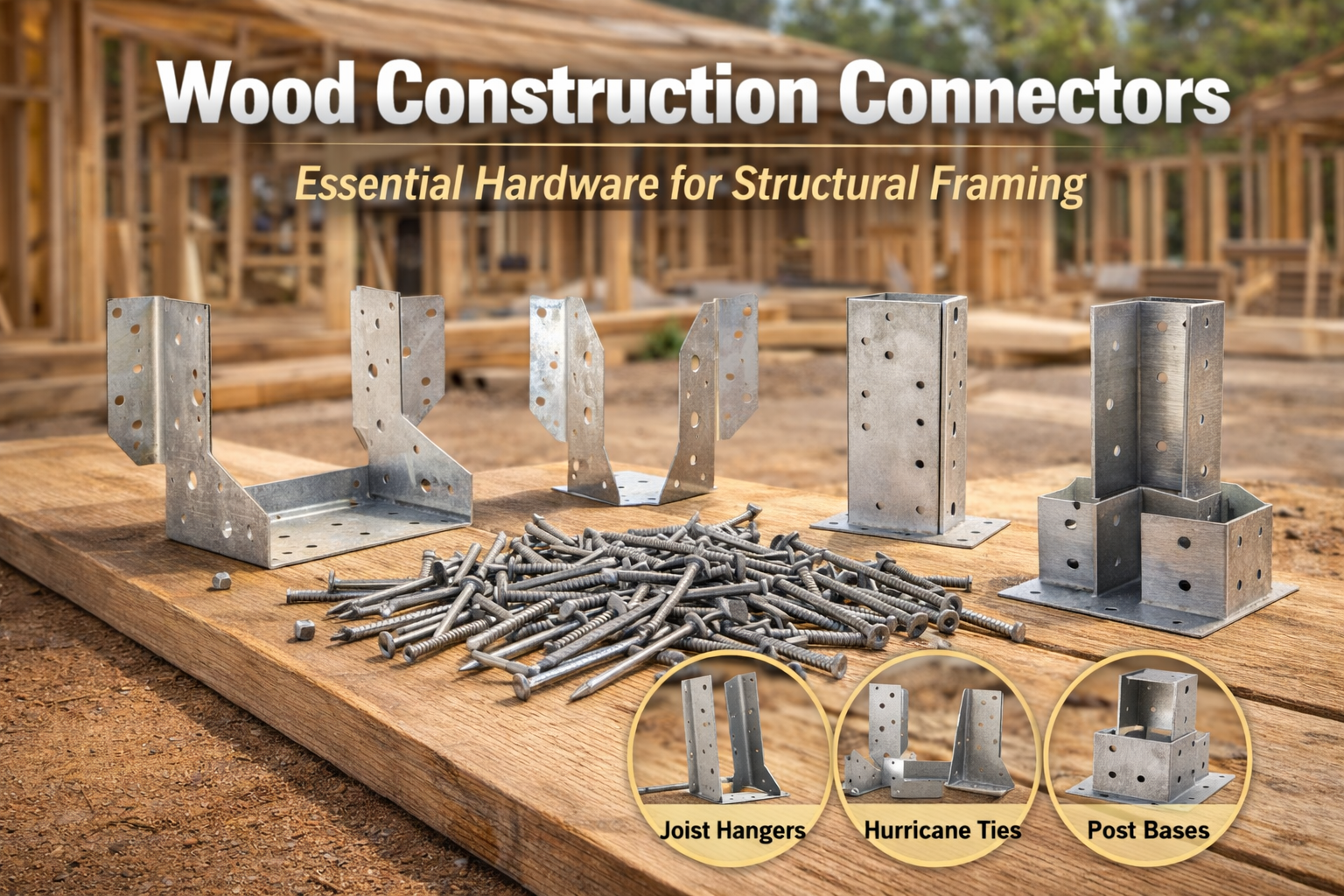
Structural Metal Connectors for Timber Framing and Building Projects
Wood construction connectors are critical components in modern timber framing and structural building systems. From joist hangers to hurricane ties and post bases, these precision-engineered metal parts improve load distribution, enhance safety, and ensure long-term durability in residential, commercial, and industrial construction.
For hardware distributors, construction material importers, and building system suppliers worldwide, sourcing high-quality wood construction connectors is essential for structural reliability and compliance with building standards.
This guide covers:
-
Types of structural wood connectors
-
Key applications in global construction
-
What to look for in a reliable manufacturer
What Are Wood Construction Connectors?
Wood construction connectors are metal fastening components designed to join, reinforce, or support timber structural elements. They are typically manufactured through precision stamping and formed from galvanized or coated steel to ensure strength and corrosion resistance.
What Are Wood Construction Connectors Used For?
Wood construction connectors are used to reinforce and stabilize timber structures by connecting beams, joists, rafters, and posts. They are widely applied in residential framing, decking systems, roof trusses, and structural reinforcement projects.
Common Types of Wood Construction Connectors
1. Joist Hangers
Provide support for floor joists and ceiling beams.
2. Hurricane Ties
Secure roof rafters to wall plates for improved wind resistance.
3. Framing Connectors
Reinforce structural joints in timber framing systems.
4. Post Bases
Anchor wooden posts to concrete foundations.
5. Angle Brackets and Reinforcement Plates
Used for corner support and structural strengthening.
Major Applications Worldwide
Wood construction connectors are widely used in:
-
Residential timber framing
-
Deck building and outdoor structures
-
Roof truss systems
-
Pergolas and wooden shelters
-
Furniture structural reinforcement
-
Agricultural and industrial wooden buildings
Their strength and dimensional accuracy directly affect structural stability.
Key Advantages of High-Quality Structural Connectors
1. Enhanced Load Distribution
Properly engineered connectors improve structural integrity.
2. Increased Safety
Minimize joint movement and reduce failure risks.
3. Corrosion Resistance
Galvanized coatings protect against moisture and environmental exposure.
4. Precision Manufacturing
Consistent dimensions ensure easy installation and compatibility.
What Distributors and Importers Should Evaluate
When sourcing wood construction connectors globally, buyers typically consider:
Precision Stamping Quality
Uniform thickness and accurate hole positioning are critical.
Material Strength
High-quality steel ensures load-bearing performance.
Surface Treatment
Galvanized or coated finishes improve durability.
Dimensional Consistency
Stable production standards reduce installation issues.
Production Capacity and Export Experience
Reliable packaging and stable lead times support large-scale distribution.
Frequently Asked Questions (FAQ)
1. What materials are wood construction connectors made from?
Most wood connectors are made from galvanized carbon steel, which provides strength and corrosion resistance.
2. Are wood connectors suitable for outdoor use?
Yes. Galvanized wood connectors are designed to resist corrosion and are suitable for outdoor decking, roofing, and structural applications.
3. What is the difference between joist hangers and hurricane ties?
Joist hangers support horizontal beams or floor joists, while hurricane ties secure roof rafters to walls to improve wind resistance.
4. Can wood construction connectors be customized?
Yes. Custom thickness, hole patterns, and private label packaging are available for distributors and project-based buyers.
5. Why is load-bearing capacity important?
Load-bearing capacity ensures that connectors can safely transfer structural loads without failure, maintaining overall building stability.
Conclusion
Wood construction connectors are essential components in structural timber systems. Their precision, strength, and corrosion resistance directly impact building safety and durability.
If you are sourcing structural wood connectors in bulk and require reliable manufacturing, stable production capacity, and customized packaging solutions, contact us for specifications and technical support.
Powered by Shiny Industry CO., LTD